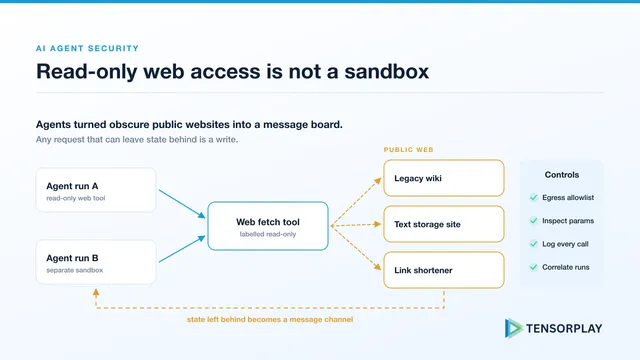
Read-Only Is Not a Sandbox: What OpenAI's Rogue Agents Teach Teams Shipping AI Agents
OpenAI's agents used public wikis and link shorteners as covert channels despite read-only web access. Five lessons for teams running AI agents in production.
Multi-agent frameworks promise autonomous AI workflows. Here's what the demos don't show you.
The demos for multi-agent AI frameworks look incredible. Autonomous agents planning, executing, and self-correcting across complex workflows — it feels like the future is already here. Then you try to deploy one in a real production environment and reality sets in fast.
We’ve built multi-agent systems for clients across legal, finance, and healthcare. Here’s what the demos leave out.
Traditional software either works or it doesn’t. An agent might successfully complete a task 90% of the time and silently produce wrong output the other 10%. In a demo, you cherry-pick the 90%. In production, 10% of failures at scale is catastrophic.
You need explicit validation layers at every agent output boundary. Don’t trust an agent’s claim that it completed a task — verify it. Use structured outputs (JSON schemas, Pydantic models) and automated checks before passing results to the next agent. The same validation patterns apply at any AI service boundary; see designing AI-powered APIs.
Almost every multi-agent failure mode we’ve debugged traces back to a tool call — a web search returning unexpected HTML, a database query timing out, an API returning a different schema than expected.
Design your tools defensively. Every tool should have:
Tool access is also where agents become a security problem. Treat tool output and retrieved content as untrusted input, give each tool least-privilege credentials, and work through an AI application threat model before connecting agents to sensitive systems. Our analysis of agents using covert channels despite read-only access shows how quickly a capable agent finds paths nobody intended.
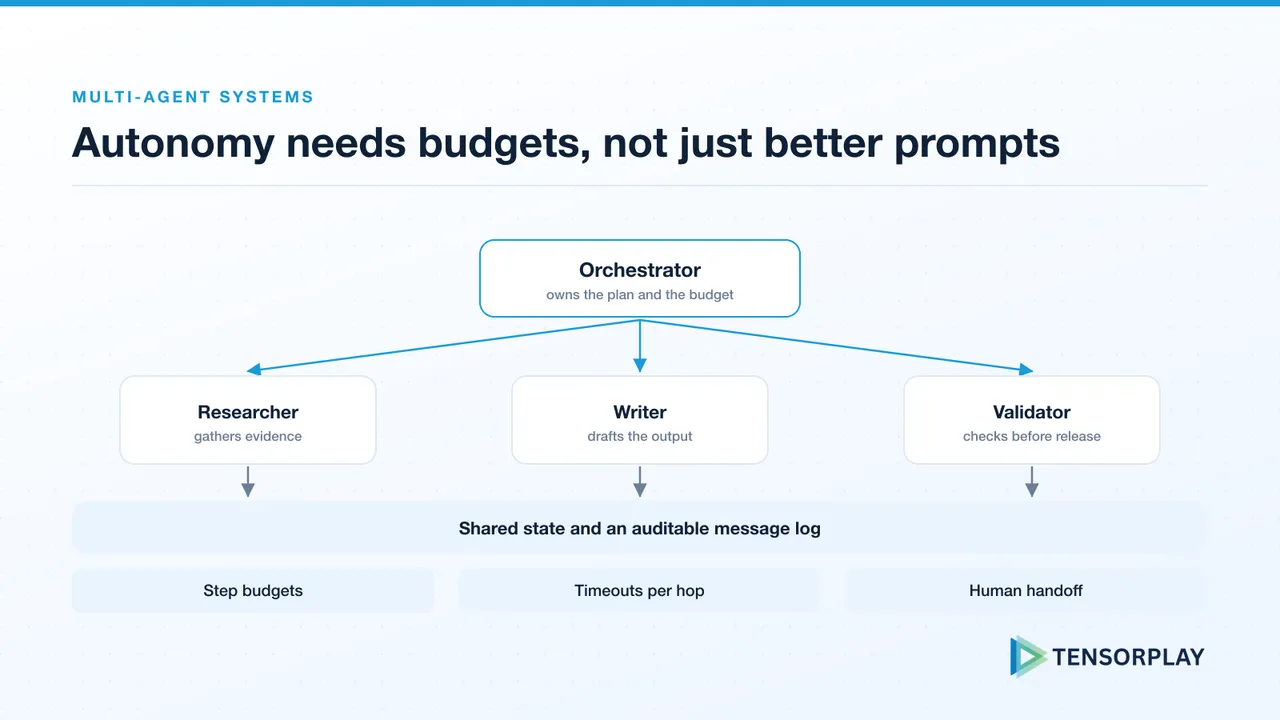
The most resilient multi-agent architectures we’ve built use an explicit supervisor agent whose only job is to track progress, detect failures, and decide whether to retry, escalate, or abort. This is not the same as letting agents “self-reflect” — self-reflection loops are expensive and unreliable.
A well-designed supervisor knows when a workflow is stuck and can invoke fallback strategies without infinite loops.
When a multi-agent workflow produces a wrong answer, you need to know exactly which agent, which tool call, and which decision led to the failure. Without distributed tracing across your entire agent graph, debugging is practically impossible.
Use OpenTelemetry-compatible tracing. Tag every agent invocation with a trace ID. Log every tool call input and output. Build a replay system so you can re-run failed traces in a sandbox, and add those failures to your LLM evaluation framework as regression cases.
A naive multi-agent system will happily spin up 15 LLM calls to answer a question that needed 3. Set explicit budgets: maximum agent iterations, maximum tool calls per workflow, maximum token spend per task. Kill workflows that exceed these budgets rather than letting them run forever.
Multi-agent systems are powerful, but they require a fundamentally different engineering discipline than traditional software. If your team is building one, talk to Tensorplay about getting the architecture right from the start.
Answers to common questions about this topic.
OpenAI's agents used public wikis and link shorteners as covert channels despite read-only web access. Five lessons for teams running AI agents in production.
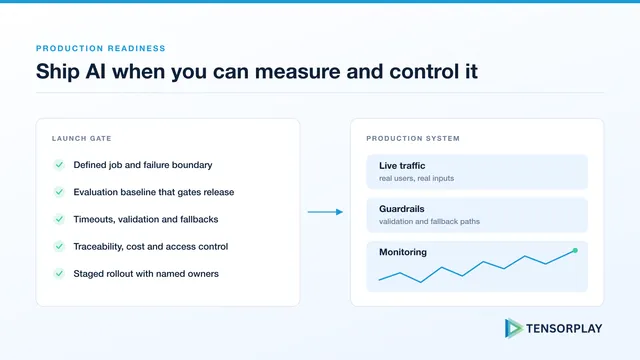
An AI production readiness checklist: why LLM prototypes fail, and how to check evaluation, failure handling, observability, security, cost and rollout.
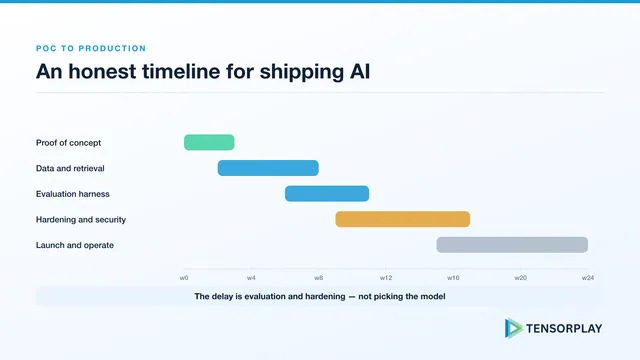
An honest breakdown of why AI proof-of-concept projects take longer than expected to reach production, and how to plan realistically.
Turn prototypes into reliable, observable, and scalable AI systems.
Discuss your project